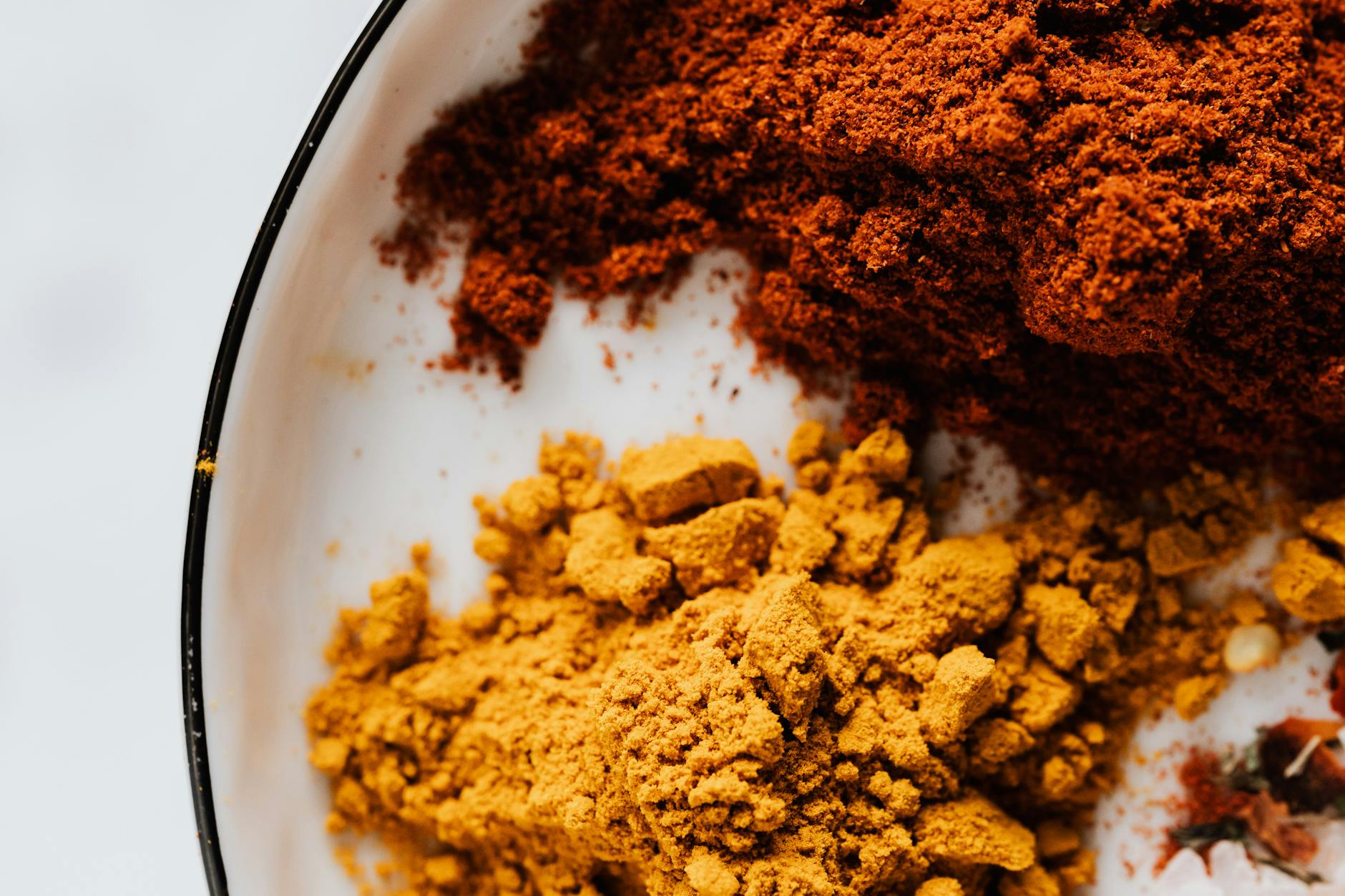
One challenge I face when writing recipes for my blog is listing ingredients, as I often use a spice mix I’ve created. The issue is that I’ve made more mix than one recipe requires, and scaling it down can be tricky. However, the perceived complexity of making a spice mix might deter some people from trying my recipes. In reality, blending my own spices couldn’t be any simpler.
What is a Spice Mix?
A spice mix is a mixture of various herbs and spices combined to create a specific flavour profile. They’re designed to enhance the flavour of food. When I say spice mixes, you may think about the dried ground varieties in glass jars on supermarket shelves.
However, I’d also include Thai curry pastes, my jerk marinade, peri-peri sauce, and so on as spice mixes. You can buy most of these things, but you can also find joy in creating them yourself—at least, I do.
Why I Started Blending My Own Spices?
I began experimenting with spice mixes when I started as a chef. Before then, I used shop-bought spice blends. However, I found some Cajun seasonings to be too hot, while curry powders used too much turmeric to achieve the expected results for millions of consumers. So, a sense of control initially ignited my interest.
Availability can raise challenges in commercial kitchens. Sometimes, you plan a menu around specific ingredients, such as Cajun or peri-peri seasoning. Then, a supply issue leaves the product unavailable. My experimentation started here, trying to achieve the same result as a temporarily out-of-stock product. At first, I fell short of expectations. But with practice, I began to understand the strength of spices and which ones belonged in a traditional spice mix. After all, knowing what the rules are allows you to break them more effectively.
My first real success came with a curried cauliflower soup. At first, I used curry powder, not much else, to season the vegetable base. However, as time went on, I tried to improve the flavour by adding fresh garlic and ginger. It was a learning curve for me. Soon, I began using a mix of ground cumin and ground coriander in quantities of 2:1. A liberal guess told me how much turmeric I needed to achieve the desired result. Soon, my sous chef called it my curried cauliflower soup and labelled it my signature dish.
4 Reasons Why I Always Blend my Own Spices
It’s Fun
This is primarily why I do it—I genuinely enjoy it. Much of my joy in making my own spices comes from the other reasons listed here. So, while this might seem like a brief section, it’s important to remember that fun supersedes everything.
A Sense of Control
Some Cajun spices contain sugar; some don’t. Some contain lemon peel and lime, some contain too much cayenne, and some are too mild. By blending my own spices, I can change ingredients as freely as I wish. To take the Cajun seasoning example, my BBQ Cajun chicken recipe calls for brown sugar, while I would hate this flavour profile in my Cajun Chicken Pasta recipe.
I can temporarily remove the ingredients that work by having my seasoning mix. The same principle applies to seasoning with salt; you can always add more, but you can’t take it away. Depending on the recipe, I can adjust spice seasonings as I go, adding salt or taking it away. You give up control and ownership of the outcome when you buy a shop-bought spice mix.


It’s A Learning Curve
A few years ago, I read a book about spices. While I can’t remember its name, I can remember the premise. It travelled the world, discussing each country’s key culinary spices while providing a recipe for its signature spice mix. This book helped me understand what should go in a spice mix and what makes a particular cuisine work, even if I don’t know what something is.
Curry powder comes in many forms. But so do curries. There are Chinese-style curries, Thai curries, Caribbean curries, African curries, and an endless list of curries from the Indian subcontinent that all use a unique mix of spices. None of the Indian spice mixes would ever be called “curry powder.” Not only does blending my own spices help me learn about how spices work together, but it also helps me understand how these cuisines work.
It Makes It Mine
As mentioned in the cauliflower soup story above, by creating my own spice blend, even if it was quite a simple mix, my version of the soup began to taste different and, in this case, better. Compared to basic curry powder, using a unique set of ingredients allowed the superiors to associate this positive change with me.
Everyone can follow a recipe, but utilising my skills in executing it enables me to turn it into a personal piece of art. I’m not following a recipe; I’m actively working on it. It’s a collaboration between me and the writer.


Where Do I Go From Here?
Blending my spice mixes is fun and easy, but experimenting and tailoring each blend to your tastes is key. I do it the easier way most of the time by using ground spices, and according to chefs worldwide, toasting and grinding spices in a pestle and mortar results in a far superior flavour. They reason that whole spices retain their freshness while ground spices lose their intensity when stored too long. When you buy ground spices, you don’t know how long the supermarket has held those items on the shelf.
I’ve worked with whole spices, but I’ve only ever blended my ground spices to make my seasoning mixes. In most kitchen dry stores, ground spices are readily available and easier to use when time is luxury. It also takes an easy recipe for readers and adds an element of skill, which makes the recipe seem far more unattainable than simply mixing a few measured spices. So, for the greater good of my blog, it makes more time to save time for you and me. It’s a labour of love that might not be worth it for a quick midweek dinner.
That said, I have a list of articles to produce in the future. One article concerns grinding my own spices and whether it’s worth it. So, I might have to come back and edit this. Until then, I’ll keep it simple and blend my own spices with ground spices.


Leave a Reply