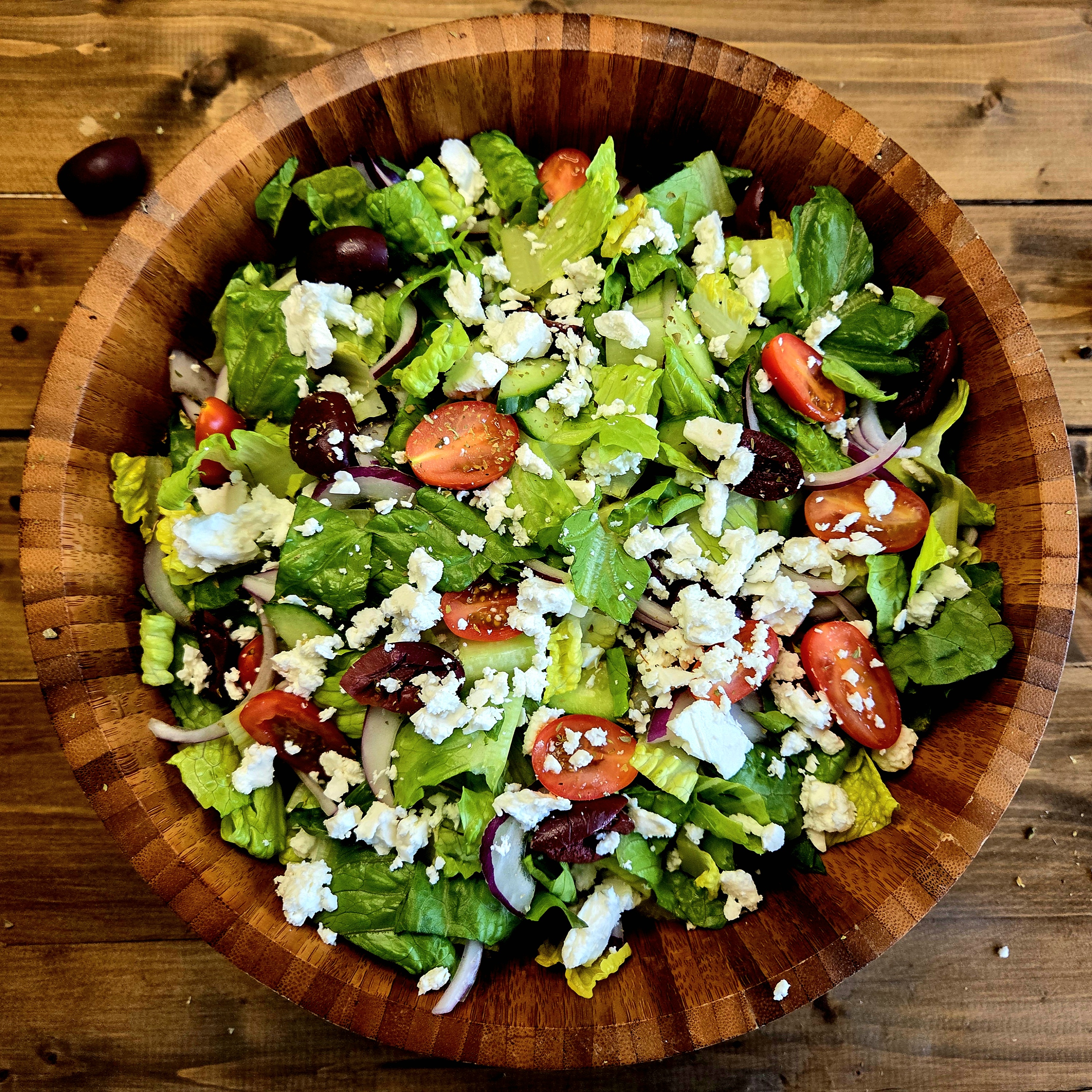
This light and fresh Greek salad offers the perfect go-to side dish as the weather grows warmer, especially alongside a barbecue. It’s also nutritionally balanced, packed with healthy fats from olive oil, loads of vegetables to help maximise your five-a-day quota, and a touch of protein from feta. However, it’s the perfect post-run recovery lunch paired with grilled chicken.
What is Greek Salad?
As its name suggests, a Greek salad is a classic Mediterranean salad with roots in Greece. You might find it on menus with its Greek name, Horiatiki. It’s often made with tomatoes, cucumbers, and onions, as well as feta and olives. However, Western recipes vary and use many ingredients of Greek inspiration, such as cos lettuce. In parts of Greece, bell peppers are found in Greek salads.
Some people might refer to Greek salad as a farmer’s lunch, since it’s thought to resemble the ingredients that a typical farmer might have available. Much like the origin of a Caesar salad, a Greek salad would have been prepared according to the scarce availability of ingredients, rather than a traditional recipe.
What Goes in My Greek Salad?
Cos Lettuce—This is the westernised version, but cos lettuce makes up the base of the salad. It’s perfect for a light lunch as it’s low in calories. It’s also high in water, making it ideal for rehydrating after a long run.
Red Onion—Red Onions add crunch. I prefer red onions, as they’re sweeter than their white counterparts. However, either can be used. Red onions are rich in quercetin, an anti-inflammatory antioxidant.
Cherry Tomatoes – Any tomato can be used to make this Greek salad, but I prefer the sweetness of cherry tomatoes, halved and tossed through the salad. Tomatoes are rich in lycopene and vitamin C.
Cucumber – Cucumbers are 90% water and offer a refreshing crunch that helps maintain electrolyte balance and hydration after a run.
Kalamata Olives—Kalamata olives, alongside feta cheese, are calorie-rich. However, those calories predominantly come from healthy monounsaturated fats.
Feta Cheese—Feta cheese is a source of calcium and protein. However, I like to use its saltiness as a natural way to season the salad.
The Dressing with Homemade Mustard
Greek salad is often seasoned with oregano and drizzled with extra virgin olive oil. However, I like a thicker, creamier dressing, so I’ve included mustard to help turn the vinaigrette into a dressing.
To make the dressing, it’s easy to put everything into a screw-top jar and shake it well. However, oil and acidic ingredients don’t combine well without adding a binder such as mustard or honey. If you want a dressing that remains stable without being shaken, slowly whisk the olive oil into the mustard and acidic ingredients.
I’ve used wholegrain mustard here as I prefer it. Any mustard would work, but it would also offer its own unique flavour profile. Wholegrain mustard is milder and can be easily made at home.

Greek Salad
Ingredients
Method
- Put all the salad ingredients (except the feta) into a bowl and toss well.
- In a separate bowl, whisk the vinaigrette ingredients together until combined. Alternatively, place them in a screw-top jar or bottle and shake to combine.
- Toss the salad with the vinaigrette to taste and serve, topping with the feta.
Leave a Reply