
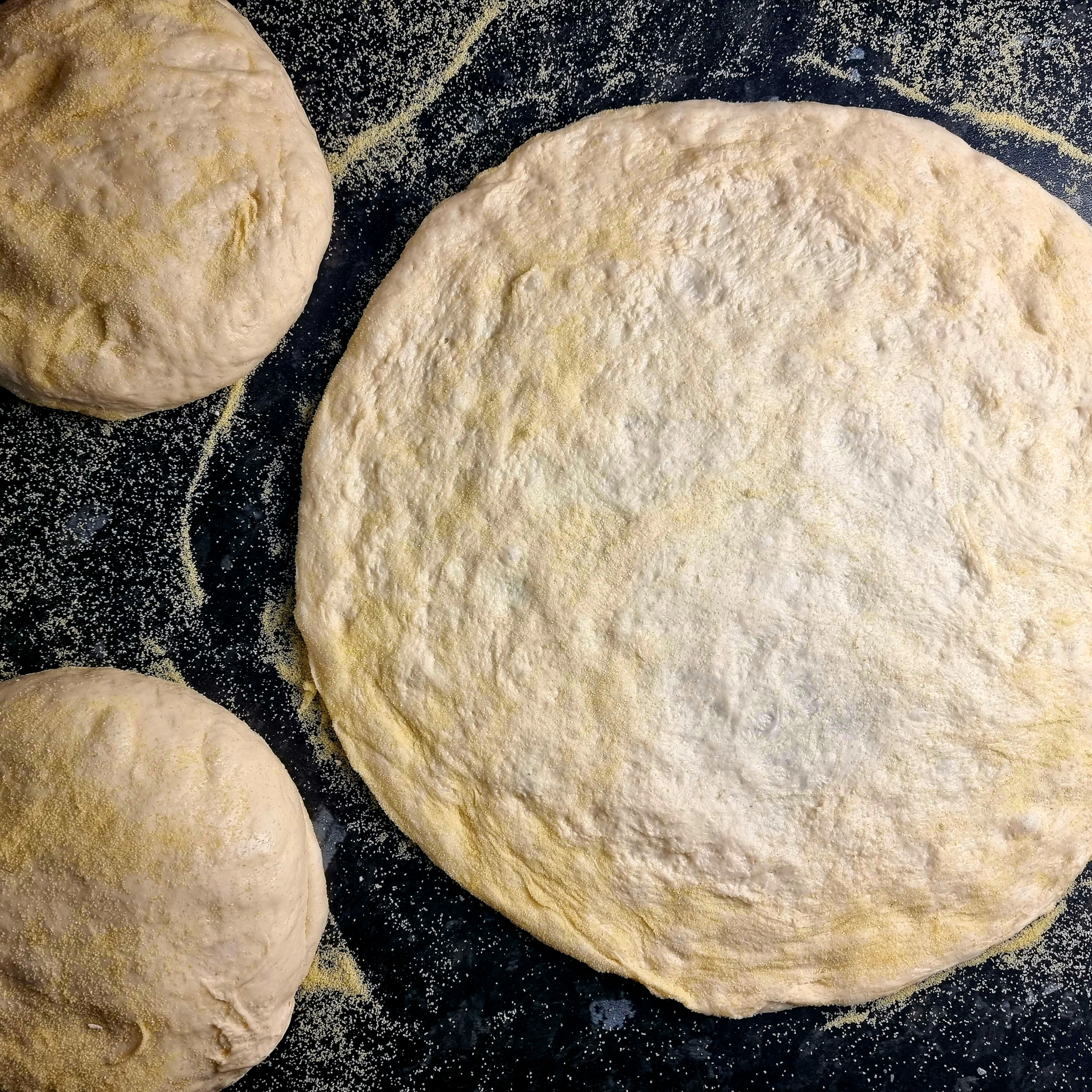
Who doesn’t love pizza? This homemade pizza dough might not be as convenient as ordering, but you’ll feel better, perform better, and won’t feel guilty about overeating; that’s a promise. This recipe makes four medium pizzas, so leave it to rise while you’re out for your long run and come home to freshly baked pizza, perfect for refuelling with friends and family.
Pizza’s thin and crispy base may give the impression that it is nothing like a granary loaf or a sourdough baguette, but pizza dough is another form of leavened bread. It might sound complicated, but homemade pizza dough follows the same basic principles as breadmaking.
To Leaven – The act of adding yeast to a dough to make it rise.
What Type of Flour Should I Use?
When making pizza dough, I often struggle with the best type of flour to use. The truth is, it probably doesn’t matter too much as long as it contains a high amount of protein. The following flours are suitable for pizza dough and breadmaking in general.
- Strong Bread Flour – Has a higher protein resulting in a higher gluten content, which gives the dough a chewier texture.
- Italian “00” flour – While 00 flour is high in protein, it’s made from softer wheat, which slightly weakens the gluten. This results in a softer dough with a greater stretch for rolling out a base.
- All-purpose Flour – It has lower protein and gluten compared to bread flour, but can still give a decent rise to bread due to its protein and gluten content.
For this recipe, I use “00” flour for a soft, elastic dough.
- Semolina – Semolina comes from durum wheat, making it a hard wheat. This gives the flour a high protein and high gluten content, resulting in a chewier texture. I wouldn’t recommend using this flour to make dough; however, it does help prevent sticking while rolling out the pizza bases. You can use plain flour, but semolina gives the pizza base a slightly crunchy texture.
Why Pizza Dough is Perfect for Runners
Well, in short, this section serves nothing but my justification for one of my favourite foods. It’s perfect for replenishing glycogen stores after a long run. And if prepared right, it might even help your next carb-loading strategy. I’d advise against pepperoni-loaded up over a classic cheese-based pizza the night before your first marathon, though.
The saturated fat content can quickly rise with the added toppings, especially with my personal choice of pepperoni and a dessert; I never eat a cheese-free pizza. However, with moderation and fewer leaner protein options such as chicken, there’s no reason why training hard shouldn’t earn you a reward, especially with a pizza dough this easy to make.
Kneading the Dough
Kneading stretches the gluten and strengthens its bonds. This allows proteins to expand as the dough rests, resulting in an elastic dough with a stronger structure.
Yeast causes fermentation, arguably the most essential ingredient in bread, which makes the dough rise. Proper kneading also helps evenly distribute carbon dioxide bubbles produced by this process. These gas pockets give a loaf of bread its height and those characteristic holes.
Caution! Over-kneading results in overworked gluten. This results in a firm, stiff dough, and the exact opposite of what you want to happen. This isn’t easy if kneading by hand, but I’m using an electric mixer, which makes it very easy to over-knead, so take care.
A well-kneaded dough should be soft and springy when pressed. A good test is to break off a small piece and stretch it out. It should be thin enough to see through.


Homemade Pizza Dough
Ingredients
- 500 g “00” Flour or Strong Bread Flour plus extra for dusting
- ½ Tsp Salt
- 7 g Instant or Dried Yeast Sachet
- 325 ml Lukewarm Water
- 2 Tbsp Extra Virgin Olive Oil
- A handful of Semolina Flour for rolling.
Instructions
- In a bowl, mix the flour, salt, and yeast.
- Make a well in the centre and pour the water and oil into the well. Using your fingertips, gently mix the flour into the water until a dough forms.
- Lightly flour a clean work surface and turn out the dough. Knead for 10 minutes until the dough springs back when pressed with a finger. Alternatively, keep the mix in the bowl and use a kneading attachment or a dough hook on a handheld blender or a standalone mixer. It will speed up the process.
- Return to a clean bowl, dusted with flour and cover. Set aside and leave for at least 1 hour.
- After 15 minutes, knock back the dough, divide it into four pieces and roll them into balls. Place the balls on a lightly floured tray and cover again. Set aside for another 30 minutes.
- Using semolina, lightly dust a work surface, and roll out the pizzas by hand or using a rolling pin. Ideally, the dough should be at least ½ cm thick.
- Preheat the oven to 220 °C / Gas mark 4.
- Preheat a pizza tray or pizza stone, then roll out the pizza bases to the width of your chosen cooking dish.
- Top the pizza dough with your favourite toppings, or garlic butter for homemade pizza bread.
- Bake for 8-12 minutes until the cheese is bubbling and the top is a light golden brown.
Leave a ReplyCancel reply