
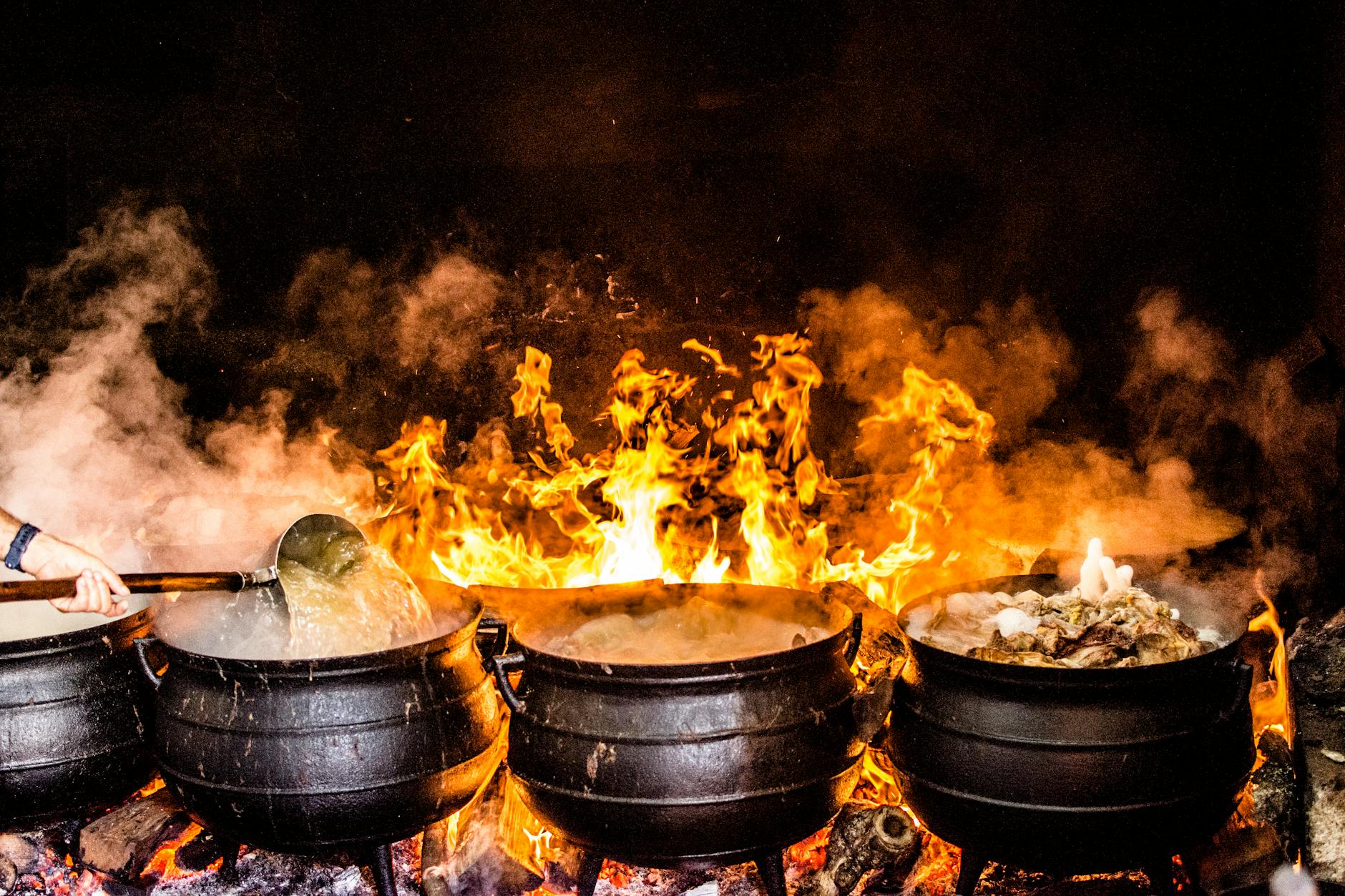
Some consider it a chore, some a passionate hobby, and some a career. While the modern world may offer solutions to the inability to cook, we all need to cook our food to survive. Yet, humans are the only species on the planet to do so, so why do we cook our food?
The Main Reason We Cook Our Food?
While we may have any number of personal reasons for cooking, a few key reasons have helped shape our survival. Food becomes more edible when we’ve cooked it. This speeds up our ability to chew food, reducing the time and calories required to consume the food we need for survival.
Our closest cousins, the great apes, spend their days chewing on food. It would be impractical for us to spend more calories on chewing than we received from eating said food in the first place. Nowadays, humans grind, chop, puree, dry, and preserve foods to help us eat and survive. However, discovering fire allowed us to cook our food and speed up our eating. This meant less chewing time and more following other interests like agriculture, axe making, and blog writing. While apes spend 80% of their day chewing their way fibrous plants, we modern humans spend less than 10% of our day eating.
Yet, there are more benefits to cooking our food than simply speeding up digestion. Here’s a list of 5 reasons why we cook our food.
5 More Reasons We Cook Our Food
Better Flavour – When we cook our food, more flavour compounds develop. When we apply heat to foods, sugars caramelise, and the exterior turns a delicious golden brown. This is known as the Maillard reaction.
Aids Digestion – Heat melts fat and turns tough connective tissue into soft, tender gelatine. It also denatures protein, meaning they unravel from their tight coil-like structures. This allows digestive enzymes to break down the proteins more efficiently. Hard-to-digest carbs such as rice and polenta are also be made edible by applying heat and water.
Safety – Heat applied to food during cooking kills bacteria, microbes, and other undesirable organisms in raw foods. Meat and fish are the most associated foods that are made safe through cooking. This is especially evident in the thorough cooking of poultry. However, red kidney beans are made safe since heat destroys a deadly toxin known as phytohemagglutinin.
Release Nutrients -While it’s true that overcooking can kill nutrients in some foods, cooking also helps release them by breaking down the tough fibrous cell walls. Resistant starches in some fibrous vegetables need heat to help release them. Cooking also promotes the body’s absorption of vitamins in some foods.
Socialise – This one may not be a physical benefit of cooking, but it’s still essential. Human beings are social creatures, and cooking helps bring people together. The ritual of cooking unites families, nations, and cultures, resulting in a shared human experience beyond that of a function essential for our survival.


Leave a ReplyCancel reply